









Anger on the Road: How Drivers and Companies Can Improve Road Safety
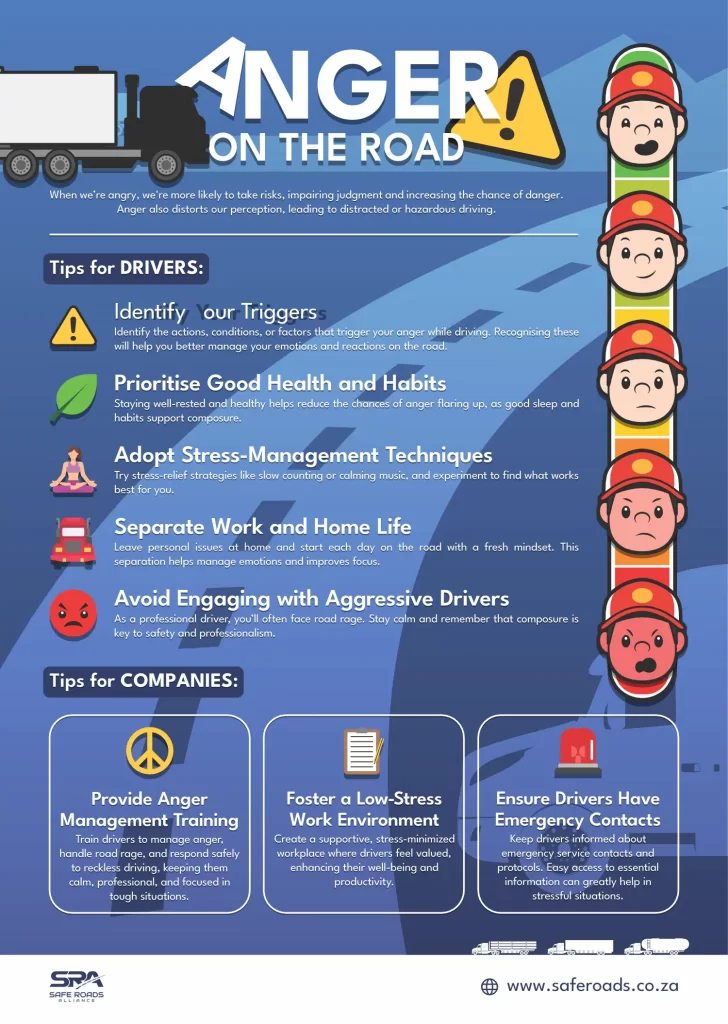
Anger behind the wheel is more dangerous than many drivers realize. The attached poster highlights an important truth: when we are angry, we are more likely to take risks, our judgment becomes impaired, and our perception can become distorted. That means even a small moment of frustration can quickly turn into distracted, aggressive, or hazardous driving.
Angry or aggressive driving can range from tailgating and unsafe lane changes to shouting, rude gestures, speeding, red-light violations, and even violent confrontation. The site also distinguishes between ordinary anger on the road and more extreme road rage, warning that any loss of self-control can escalate quickly and put everyone at risk.
For drivers in South Africa, learning how to manage anger on the road is not only a personal safety issue. It is also a professional responsibility, especially for fleet drivers, delivery drivers, transport operators, and anyone who spends long hours in traffic. Below is an optimized, practical guide based on the poster’s advice.
Why Anger on the Road Is So Dangerous
Anger changes the way people drive. It can make a driver more impatient, more reactive, and more likely to interpret mistakes by other road users as deliberate attacks. Aggressive driving often happens when drivers take their resentment, frustration, and stress with them behind the wheel, and these attitudes can lead directly to crashes and confrontations.
This is why road rage prevention is such an important part of road safety in South Africa. A driver who is calm is more likely to leave enough following distance, obey traffic signals, make better decisions, and respond safely under pressure. A driver who is already emotionally overloaded is far more likely to overreact.
1. Identify Your Triggers
The first step in managing anger on the road is knowing what sets it off. The poster advises drivers to identify the actions, conditions, or factors that trigger their anger while driving so they can manage their emotions more effectively. Common triggers may include heavy traffic, being cut off, running late, loud passengers, poor sleep, work pressure, or aggressive behaviour from other drivers.
When you find yourself in a stressful driving environment, or when your mood makes you irritable and impatient, you should consciously calm down, take a breath, and relax. That advice matters because emotional state often shows up directly in driving behaviour.
A smart habit is to notice patterns. Ask yourself whether you become angry when you are late, hungry, tired, or under pressure. Once you know your triggers, you can start preventing them before they affect your driving.
2. Prioritise Good Health and Habits
The attached poster also reminds drivers to prioritise good health and habits, noting that being well-rested and healthy can reduce the chance of anger flaring up. Good sleep, healthy routines, and better personal well-being all support composure on the road.
Fatigue, emotional stress, illness, and boredom can all affect alertness and driver safety. The site advises starting a trip with enough sleep, watching for signs of sleepiness, and taking regular rest breaks during longer journeys.
There is a strong connection between tiredness and anger. When drivers are exhausted, their patience drops, concentration weakens, and reaction to minor frustrations becomes more intense. One of the best safe driving tips in South Africa is simple: do not ignore your physical condition before driving.
3. Use Stress-Management Techniques While Driving
The poster encourages drivers to adopt stress-management techniques such as slow counting or calming music and to find what works best for them. This is practical, realistic advice because anger often rises in seconds, and drivers need quick ways to reset their emotions before they act on them.
Plan your journey to reduce anxiety, adopt a positive mental attitude, play music that reduces stress, count from one to ten, and focus on changing your own response rather than trying to change other drivers.
Simple calming habits can make a real difference. Lower the noise in the vehicle, breathe deeply at traffic lights, avoid rushing, and leave earlier when possible. Small choices help prevent emotional overload and support better decision-making behind the wheel.
4. Separate Work and Home Life Before You Drive
Another important point from the poster is to separate work and home life. Drivers are advised to leave personal issues at home and start each day on the road with a fresh mindset. That mental separation helps improve focus and reduces emotional spillover into driving behaviour.
Drivers should forget work or home worries and concentrate on driving. This is a valuable reminder for professional drivers, business owners, parents, and commuters alike. Emotional baggage does not stay in the background when you are in traffic; it often becomes part of your reactions.
Before starting the engine, take a moment to reset. If you are upset, angry, or distracted, give yourself a few minutes to breathe and refocus. Safe driving starts with a clear mind.
5. Avoid Engaging With Aggressive Drivers
One of the strongest messages in the attached poster is to avoid engaging with aggressive drivers. It reminds professional drivers that they will often face road rage and that composure is key to both safety and professionalism.
Drivers are told to stay calm, avoid eye contact, avoid gestures or provocative responses, and do what they can to avoid conflict. If another driver is putting pressure on you, move over when safe and let them pass. If someone becomes threatening, stay in your vehicle, keep the doors locked, and go to a place where you can get help.
This is one of the most important road rage prevention tips for South African drivers: do not retaliate. Do not hoot in anger, flash lights, chase, brake-check, or argue through the window. Getting home safely matters more than winning a moment on the road.
6. Plan Ahead to Reduce Driving Stress
Many cases of anger on the road begin before the trip even starts. Drivers who are late, lost, under pressure, or unsure of the route are more likely to become impatient. Planning your journey to reduce stress and anxiety, knowing your stops in advance, and avoiding pressure to make up lost time.
Planning ahead is also important for professional drivers and business fleets. Realistic schedules, sensible delivery targets, and proper route planning reduce the emotional pressure that can push drivers into aggressive behaviour. Good planning is not only about efficiency. It is also about safety.
7. What Companies Can Do to Prevent Anger on the Road
The poster does not only speak to drivers. It also gives clear recommendations for companies: provide anger management training, foster a low-stress work environment, and ensure drivers have emergency contacts and protocols available.
These are strong workplace road safety measures. Anger management training can help drivers recognise triggers, respond calmly to aggressive motorists, and stay professional under pressure. A low-stress work environment can reduce burnout, improve morale, and make drivers feel supported. Easy access to emergency contacts and procedures can also reduce panic in stressful situations.
Driver mood, fatigue, stress, and mental state all affect safety outcomes. When companies reduce pressure, encourage rest, and support calm, responsible driving, they help lower the risk of aggressive incidents on the road.
8. Rest Often and Take Fatigue Seriously
Fatigue and anger are closely linked. Drivers who are tired are more likely to lose patience, miss hazards, and make unsafe decisions. Fatigue affects everyone and says emotional stress can also contribute to tiredness. The site recommends enough sleep before a trip, watching for danger signs like yawning or trouble paying attention, and taking breaks every two hours or roughly every 200 km on longer trips.
For company drivers, transport teams, and commuters, this matters a great deal. A tired driver is often a frustrated driver. Building rest into the schedule can improve both mood and concentration, which makes it a powerful road safety habit.
Anger on the road is not just an attitude problem. It is a road safety risk. The attached poster makes that clear by showing how anger can increase risk-taking, distort judgment, and lead to dangerous driving behaviour. It also offers practical solutions for both drivers and companies, from identifying triggers and managing stress to training, emergency planning, and building a healthier work environment.
- The ABCs of Defensive Driving in South Africa
- Understanding Speed Limits in South Africa: Why Speed Awareness Saves Lives
- Tyre Condition and Road Safety in South Africa: Why Your Tyres Matter More Than You Think
- Safety Belt Rules in South Africa: Why Buckling Up Saves Lives
- Road Signs in South Africa: Why Understanding Them Saves Lives
Review
90%
Summary For drivers in South Africa, learning how to manage anger on the road is not only a personal safety issue. It is also a professional responsibility, especially for fleet drivers, delivery drivers, transport operators, and anyone who spends long hours in traffic. Below is an optimized, practical guide based on the poster’s advice.