






Economical Driving in South Africa: Smart Fuel-Saving Habits for Safer Roads
Economical driving is not only about saving money at the pump. It is also about driving more smoothly, reducing wear on your vehicle, lowering stress, and improving safety on South African roads. For professional drivers and everyday motorists alike, the way you accelerate, brake, idle, load your vehicle, and plan ahead can make a real difference to fuel use. SRA defensive driving guidance also highlights that driver habits, vehicle condition, traffic flow, and route choice all play a major role in fuel economy.
In South Africa, economical driving matters even more because many trips involve mixed conditions such as urban traffic, long-distance travel, mountain passes, gravel roads, and congested routes. That means a fuel-smart driving style is not just useful on freeways. It matters in towns, cities, rural roads, delivery routes, and long-haul transport too.
What is economical driving?
Economical driving means using driving techniques that reduce unnecessary fuel consumption while keeping the vehicle safe, stable, and roadworthy. It includes smooth acceleration, correct tyre pressure, proper vehicle maintenance, sensible speed management, planning ahead in traffic, and avoiding wasteful habits such as excessive idling or carrying unnecessary weight. SRA guidance also links these habits to lower maintenance costs and better overall road safety.
Why economical driving matters
Fuel-efficient driving helps in more ways than most people realise. It can lower running costs, reduce tyre and brake wear, improve engine performance, and even decrease harmful emissions. Proper maintenance and smoother driving habits also make the vehicle more reliable and less likely to break down.
For fleet operators, delivery drivers, truck drivers and business owners, economical driving also protects profit. SRA guidance on fleet management notes that driver training and better driving habits can contribute to lower fuel consumption, lower maintenance costs and fewer accidents.
Interesting facts about economical driving in South Africa
1) Do not overfill the fuel tank or carry unnecessary weight
Your training material is right to warn against overfilling the tank. Vehicle maintenance guidance specifically says “do not overfill,” and separate fuel-economy guidance also notes that unnecessary load increases fuel use because the vehicle needs more energy every time it accelerates. In simple terms, extra weight costs money. That is why economical driving includes keeping the vehicle as light as practical and avoiding carrying items you do not need.
2) Make sure tyre pressure is correct
Correct tyre pressure is one of the easiest and most important fuel-saving checks. SRA guidance explains that low tyre pressure, poor alignment and tyre wear increase rolling resistance, which means the engine has to work harder and use more fuel. Correct tyre pressure also improves handling and braking, which makes it a safety issue as well as a fuel issue.
3) Repair air and fuel leaks immediately
Air leaks, fuel system problems and neglected filters can all hurt fuel economy. SRA vehicle maintenance guidance warns that dirty air filters, worn parts and poor servicing increase fuel consumption, while fuel system checks are important for both efficiency and safety. Prompt repairs are cheaper than allowing a small problem to become an expensive one.
4) Do not let the engine idle unnecessarily
Unnecessary idling wastes fuel without moving you forward. SRA guidance notes that extended idling can use more fuel than it saves, and several fuel-saving articles recommend switching off the engine when it is safe to do so during longer waits. This is especially important in stop-start South African traffic, loading zones, school queues, and delivery stops.
5) For trucks and buses, only move off when the air pressure is correct
This point is especially important for heavy vehicles. SRA’s truck and bus safety checklist says that when starting the vehicle, air pressure must build up to maximum cut-out pressure. For professional drivers, this is not only about mechanical care. It is about safe braking, correct system performance and disciplined vehicle checks before moving off.
6) Avoid unnecessary stops on steep inclines
On hilly routes and mountain passes, stopping and pulling away repeatedly can waste fuel and place extra strain on the engine and drivetrain. SRA mountain-driving guidance for trucks emphasises fuel-saving “green band” driving and warns against labouring or overheating the engine on climbs. That supports a practical lesson for South African driving: keep momentum where it is safe and legal, and avoid unnecessary stops on steep inclines.
7) Use the highest suitable gear at the lowest practical RPM
Your training graphic refers to staying in the green band, which is excellent advice for commercial driving. SRA fuel-saving guidance says wrong gears and high RPM driving waste fuel, and one source notes that keeping revs lower can reduce petrol consumption significantly. For everyday motorists, the principle is simple: shift smoothly, avoid over-revving, and do not force the engine to work harder than necessary.
8) Observe and plan the road ahead
This is one of the smartest fuel-saving habits of all. SRA guidance explains that maintaining a safe following distance and looking well ahead gives you more time to react, slow down gently, and avoid unnecessary full stops. In other words, good observation saves fuel because smooth driving uses less fuel than repeated hard braking and acceleration.
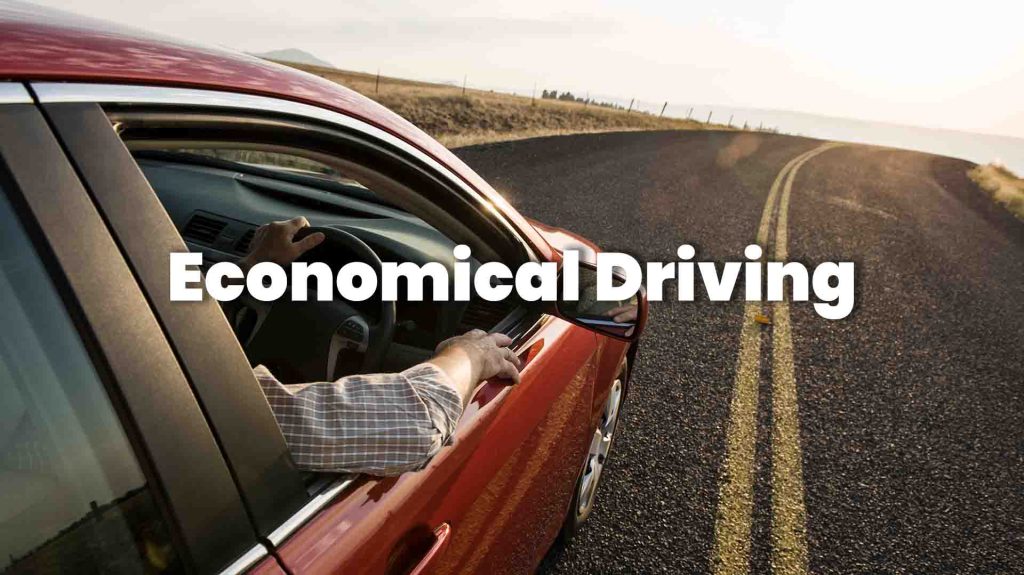
Economical Driving in South Africa: Smart Fuel-Saving Habits for Safer Roads
Reducing speed can make a noticeable difference
SRA guidance says reducing speed by as little as 20 km/h can cut fuel consumption by up to 20% in certain conditions. It also notes that on highway driving, a steady speed around 100 km/h often supports better fuel efficiency than pushing right up to the speed limit.
Air conditioning affects fuel use
One South African fuel-saving source says air conditioning can use up to 5% of your fuel, especially when combined with idling. Another notes that at higher speeds, driving with windows open can also increase drag, so the smarter option depends on speed and conditions.
Planning your route saves more than time
SRA guidance recommends using navigation tools and planning routes to avoid congestion, unnecessary trips, and traffic lights where possible. In South African cities, that can be especially useful when traffic volumes are high or when disruptions affect traffic flow.
Overloading increases fuel use
Overloading is not only a road safety risk. SRA guidance also notes that overloaded vehicles increase fuel consumption and add wear to tyres, brakes and suspension components. For businesses and private drivers alike, overloading costs more than many people expect.
Looking further ahead can save fuel
SRA guidance says watching well ahead and keeping a healthy following distance helps drivers avoid coming to a complete stop unnecessarily. This is a great reminder that economical driving starts in the mind before it shows up on the fuel bill.
Economical driving tips for everyday South African motorists
Even though some of these principles come from professional driver training, they apply just as well to private vehicles:
Keep your vehicle maintained
Regular servicing, clean filters, correct oil, good wheel alignment and proper tyre pressure all help your vehicle run more efficiently.
Avoid peak stop-start traffic where possible
Repeated starting, stopping and idling hurt fuel economy. Route planning and flexible timing can help reduce this.
Accelerate gently and brake smoothly
Harsh acceleration and abrupt braking waste fuel and add wear to the vehicle.
Use air conditioning wisely
Use it when needed, but understand how speed, temperature and drag affect overall fuel use.
Keep the vehicle light
Remove unnecessary cargo, tools or equipment you do not need for the trip.
A simple economical driving checklist
Before every trip, ask yourself:
- Is my tyre pressure correct?
- Am I carrying unnecessary weight?
- Is the vehicle properly serviced?
- Can I avoid congestion by planning my route?
- Am I likely to idle for long periods?
- Will I drive smoothly, stay in the correct gear, and look far enough ahead?
A professional driver is not only the one who reaches the destination. It is the one who gets there safely, smoothly and efficiently. That is the real value of economical driving.
Final thoughts
Economical driving in South Africa is about more than saving fuel. It is about discipline, planning, mechanical care and defensive driving. When you combine correct tyre pressure, smooth gear changes, proper maintenance, less idling, lighter loads and better observation, you build safer habits that benefit both your wallet and your vehicle. For businesses, fleets and professional drivers, those habits also improve uptime and reduce operating costs.
- The ABCs of Defensive Driving in South Africa
- Understanding Speed Limits in South Africa: Why Speed Awareness Saves Lives
- Tyre Condition and Road Safety in South Africa: Why Your Tyres Matter More Than You Think
- Safety Belt Rules in South Africa: Why Buckling Up Saves Lives
- Road Signs in South Africa: Why Understanding Them Saves Lives
Review
95%
SummaryEconomical driving in South Africa is about more than saving fuel. It is about discipline, planning, mechanical care and defensive driving. When you combine correct tyre pressure, smooth gear changes, proper maintenance, less idling, lighter loads and better observation, you build safer habits that benefit both your wallet and your vehicle. For businesses, fleets and professional drivers, those habits also improve uptime and reduce operating costs. Economical driving in South Africa is about more than saving fuel. It is about discipline, planning, mechanical care and defensive driving. When you combine correct tyre pressure, smooth gear changes, proper maintenance, less idling, lighter loads and better observation, you build safer habits that benefit both your wallet and your vehicle. For businesses, fleets and professional drivers, those habits also improve uptime and reduce operating costs.