









Fitness for Driving: Why Driver Health and Wellbeing Matter on South African Roads
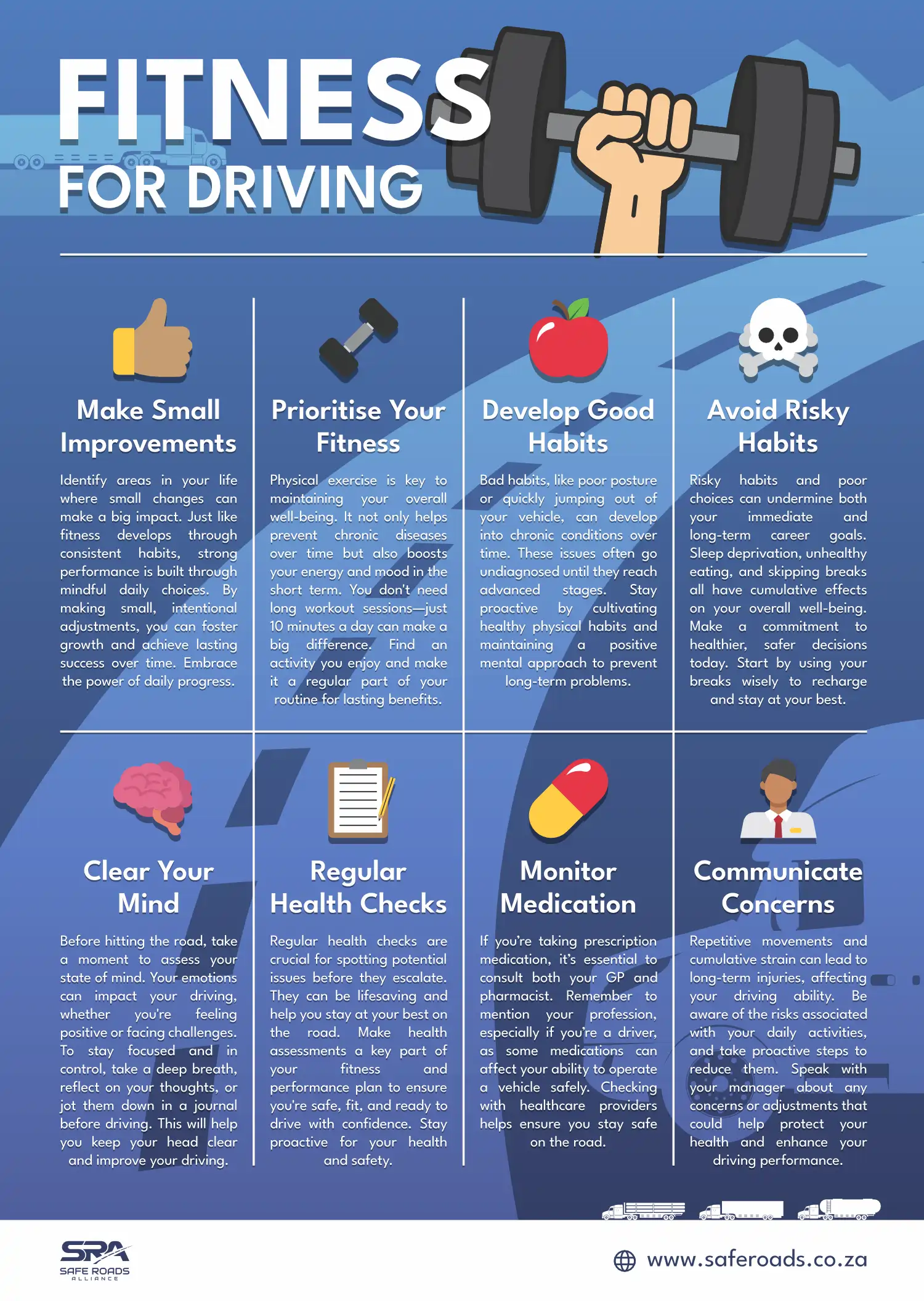
Being fit to drive is about far more than knowing the rules of the road. It is about whether your body and mind are truly ready for the demands of driving safely. The SRA (Safe Roads Alliance) Fitness for Driving poster highlights this clearly on page 1, encouraging drivers to make small improvements, prioritise fitness, build good habits, avoid risky habits, clear the mind before driving, schedule regular health checks, monitor medication, and communicate concerns early.
That message matters because driving is a serious responsibility, and both physical and mental health directly affect driver performance. Road safety guidance from Arrive Alive also stresses that driver health should be treated as an important part of road safety strategy, especially for people who spend long hours on the road or drive professionally.
For SRA, fitness for driving means building the daily habits that help drivers stay alert, focused, comfortable, and in control. On South African roads, where long-distance travel, freight movement, traffic pressure, and fatigue are real issues, driver wellbeing is not optional. It is part of safe driving.
Why Fitness for Driving Matters
A driver may have technical skill and years of experience, but still be unsafe if they are unwell, exhausted, distracted, stiff, stressed, or affected by medication. Arrive Alive notes that safe driving depends on physical and mental ability, while its defensive driving guidance adds that preparedness starts before the journey begins, with an honest awareness of your own abilities and limits.
This is especially important in South Africa, where long trips are common and road conditions can demand sustained concentration for hours at a time. Arrive Alive describes long-distance driving as anything over roughly three hours or about 300 km, and recommends regular breaks because prolonged driving requires exceptional vigilance.
That is why the SRA poster focuses on the whole person, not only the vehicle. Safer driving starts with fitter, healthier, more self-aware drivers.
1. Make Small Improvements That Add Up Over Time
One of the strongest ideas in the SRA poster is that small changes can make a big difference. Page 1 encourages drivers to identify areas in life where small, consistent improvements can lead to lasting success and stronger performance over time.
That principle fits perfectly with road safety. Good driver fitness is rarely built through one dramatic change. It is built through small daily choices such as sleeping better, sitting properly, stretching during breaks, drinking water, eating more wisely, and pausing to reset mentally before a trip. Arrive Alive’s road safety guidance repeatedly links driver fitness, healthier habits, and alertness on the road.
For SEO and for practical road safety, this is a message worth repeating: small healthy habits support safer driving habits.
2. Prioritise Physical Fitness
SRA advises drivers to prioritise fitness and notes that even short periods of regular exercise can improve wellbeing, energy, and mood. The poster points out that you do not need long workout sessions for exercise to make a difference.
Arrive Alive supports this by explaining that physical fitness is essential to safe driving and that even simple exercise, such as regular walking, can help maintain the body for better performance. Its road safety content also connects healthier drivers with better alertness and better responses in emergencies.
For professional drivers, this matters even more. Long hours of sitting, limited movement, irregular schedules, and fatigue can all reduce physical wellbeing over time. Prioritising exercise helps support stamina, posture, mood, and concentration, all of which contribute to driver fitness in South Africa.
3. Develop Good Habits Behind the Wheel and Beyond It
The SRA poster warns that bad habits such as poor posture or careless physical movement can develop into chronic problems over time. It encourages drivers to stay proactive by building healthier physical habits and maintaining a positive mental approach.
Arrive Alive echoes this idea in its driver behaviour content, noting that bad habits can begin even before the ignition is turned on. It specifically highlights basics such as proper seat position and mirror position as critical to comfortable and safe driving, especially on longer trips.
Good posture also matters. Arrive Alive’s guidance on back safety while driving explains that poor seating position and prolonged vibration can strain the lower back, while proper lumbar support and a more natural upright position can reduce pressure and discomfort.
In simple terms, good driving habits are not only about speed and signalling. They also include how you sit, how you enter and exit the vehicle, how often you stretch, and whether you protect your body from long-term strain.
4. Avoid Risky Habits That Undermine Driver Health
SRA warns against risky habits such as sleep deprivation, unhealthy eating, and skipping breaks, noting that these choices can damage both immediate performance and long-term wellbeing. The poster encourages drivers to use breaks wisely and commit to safer, healthier decisions.
That advice lines up closely with Arrive Alive guidance. The site describes driver tiredness as one of the most significant threats to road safety and links it to severe crashes such as head-on collisions and rollovers. It also advises drivers on long trips to take a break after about two hours or 200 km.
Healthy eating matters too. Arrive Alive recommends planning road snacks in advance, choosing water, nuts, fruit, vegetables, and other lighter options over foods loaded with sodium and empty calories. It also warns that sugary foods can create a short burst of energy followed by sluggishness.
For SRA, this is an important road safety message: the risky habits that seem small today can quietly reduce alertness, patience, physical comfort, and driving performance tomorrow.
5. Clear Your Mind Before You Drive
On page 1, SRA reminds drivers to assess their state of mind before hitting the road. The poster notes that emotions can affect driving and suggests simple steps like breathing deeply, reflecting, or writing thoughts down before a trip to help clear the head.
Arrive Alive also highlights the importance of mental readiness. Its road safety content explains that driving is one of the most stressful activities many people do in a working day and that safe driving requires a very high level of concentration. It also warns that mental health challenges, emotional stress, poor concentration, impulsivity, and irritability can affect safe driving.
This is a powerful point for any driver wellbeing article. Even when a vehicle is mechanically sound, the driver may still be unfit if mentally overloaded, distracted, anxious, or emotionally unsettled. Clearing your mind before the drive is a simple but effective fitness-for-driving habit.
6. Schedule Regular Health Checks
The SRA poster says regular health checks are crucial for spotting problems before they escalate and for helping drivers stay safe, fit, and ready to drive with confidence.
Arrive Alive supports this health-first approach. Its road safety content makes the case that driver health should be addressed by transport strategies and that drivers should never overestimate their fitness to drive when they have health concerns.
Regular screening can help identify issues such as blood pressure concerns, fatigue-related health problems, chronic pain, or medication-related side effects before they begin affecting performance on the road. Arrive Alive also promotes healthy lifestyle measures such as regular physical activity, stress management, and following medical advice as part of safer driver fitness.
For SRA, health checks for drivers should be seen as prevention, not inconvenience.
7. Monitor Medication Carefully
SRA advises drivers to consult both a GP and a pharmacist if they are taking prescription medication, especially if they drive for work, because some medicines can affect the ability to operate a vehicle safely.
Arrive Alive gives the same warning. Its medication guidance says drivers should ask a doctor or pharmacist whether a prescription or over-the-counter medicine may affect driving or mental alertness. It also says drivers should mention that they will be driving or operating heavy machinery, and if medication affects driving, they should stop driving and seek medical advice rather than simply discontinuing treatment on their own.
This is one of the most important medication and driving messages for road safety. Side effects such as drowsiness, dizziness, blurred vision, slower reactions, or impaired coordination can all increase crash risk, and the effect can vary from person to person.
8. Communicate Concerns Early
The final message in the SRA poster is to communicate concerns. It warns that repetitive movement and cumulative strain can lead to long-term injury and encourages drivers to speak with managers about concerns or adjustments that could protect their health and improve driving performance.
This aligns with wider road safety guidance around driver preparation and safe work culture. Arrive Alive notes that many drivers rush through basics because of pressure in the system, and that neglecting comfort, posture, and preparation can undermine safe driving. It also emphasises that road safety strategies should address driver health more directly.
For employers, fleet operators, and professional drivers, this means concerns about pain, fatigue, medication, stress, or poor seat ergonomics should never be ignored. Speaking up early can prevent long-term problems and reduce road risk.
Fitness for Driving Is a Daily Safety Habit
The strongest takeaway from the SRA Fitness for Driving poster is that safer driving is built through consistent daily behaviour. Page 1 presents fitness for driving as a combination of healthier routines, better self-awareness, proper medical attention, and smarter lifestyle choices.
Road safety guidance from Arrive Alive reinforces the same idea from several angles: physical fitness matters, diet matters, fatigue matters, mental clarity matters, medication matters, and preparation matters. Together, those factors shape whether a driver is truly fit to drive safely.
For SRA, the message is clear: driver health and road safety go hand in hand. When drivers make better daily choices, they improve not only their own wellbeing but also the safety of everyone sharing the road.
- The ABCs of Defensive Driving in South Africa
- Understanding Speed Limits in South Africa: Why Speed Awareness Saves Lives
- Tyre Condition and Road Safety in South Africa: Why Your Tyres Matter More Than You Think
- Safety Belt Rules in South Africa: Why Buckling Up Saves Lives
- Road Signs in South Africa: Why Understanding Them Saves Lives
Review
98%
Fitness for Driving: Why Driver Health and Wellbeing Matter on South African Roads Fitness for driving is about more than skill behind the wheel. Learn how SRA (Safe Roads Alliance) connects exercise, healthy habits, medication awareness, regular health checks, and mental clarity to safer driving on South African roads.