











Mind Your Brain: Why Driver Mental Health Matters for Road Safety in South Africa
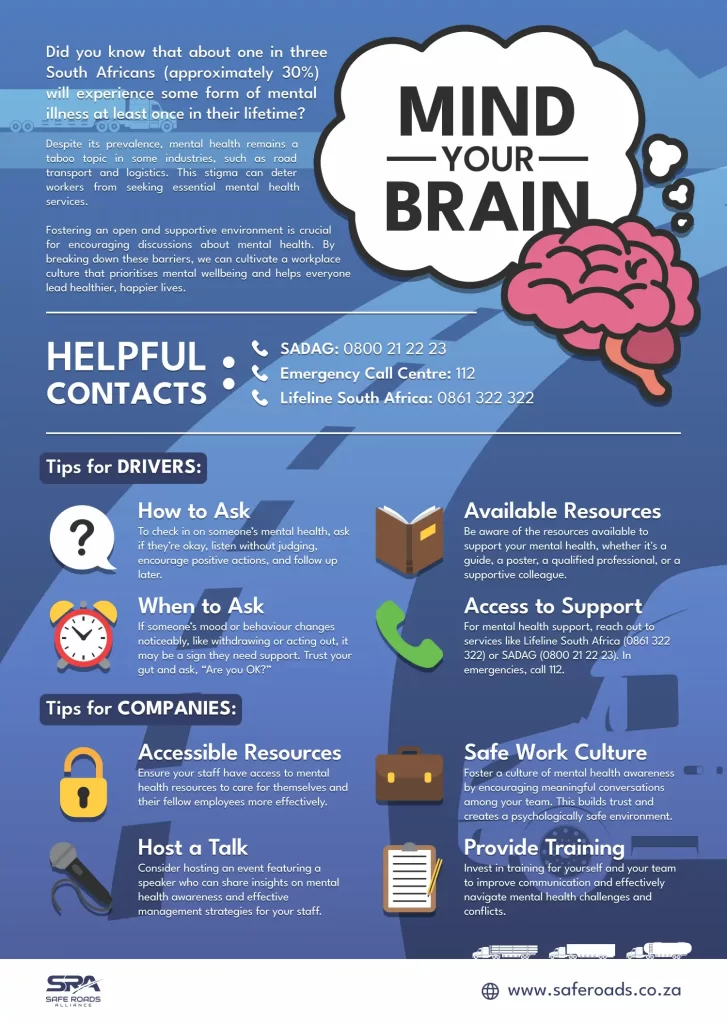
Mental health is a road safety issue, not just a personal issue. The SRA (Safe Roads Alliance) Mind Your Brain poster highlights that about one in three South Africans may experience some form of mental illness in their lifetime, and it warns that mental health is still treated as a taboo subject in industries such as road transport and logistics. The poster also stresses that open, supportive workplaces make it easier for people to seek help and protect their wellbeing.
Arrive Alive reinforces this connection between wellbeing and safety. Its guidance explains that poor mental health can affect concentration, information processing, judgement, impulsivity, irritability, and risk-taking behind the wheel. It also notes that for commercial and fleet drivers, stigma, isolation, and fear of speaking up can make mental health challenges even harder to address.
For SRA, this message is clear: if we want safer roads in South Africa, we need to talk more openly about driver mental health, emotional wellbeing, and support in the workplace.
Why Mental Health Matters for Driver Safety
A driver does not need to be physically ill to be unsafe on the road. Arrive Alive explains that poor mental health can affect safe driving through poor concentration, poor judgement, anxiety, panic symptoms, impulsiveness, irritability, and aggressive behaviour. It also notes that stress, together with fatigue, is a major factor in driver wellbeing.
Arrive Alive also warns that mental and emotional distractions can make drivers more aggressive, less tolerant of other road users, and less attentive to changing hazards and road conditions. That means emotional strain at work or at home can show up in delayed reactions, poor decisions, and dangerous behaviour on the road.
In practical terms, driver mental health affects how well a person focuses, how calmly they respond under pressure, and how safely they handle traffic, fatigue, delays, and conflict. That is why mental wellbeing should be seen as part of driver fitness.
The Real Pressure on Drivers in Transport and Logistics
Professional drivers often work under pressure. Long hours, time targets, loneliness, fatigue, poor sleep, stressful routes, and exposure to traumatic incidents can all affect mental wellbeing. Arrive Alive notes that many commercial drivers work in solitary conditions and that poor mental health among fleet and truck drivers deserves far more attention.
Arrive Alive also points out that trauma can change a driver’s behaviour. After traumatic events, some drivers may become withdrawn, while others may become defensive, aggressive, exhausted, or more vulnerable to road rage. Problems such as poor sleep, trouble concentrating, panic, and emotional overload can all raise a driver’s risk profile.
This is why broader industry support matters. Arrive Alive’s coverage of the SaferStops initiative explains that driver wellbeing is linked to better road safety and highlights the need for stress-management tools, mental health resources, healthier facilities, and better support for commercial drivers across South Africa.
What SRA Says Drivers Should Do
The SRA poster gives practical, people-first advice for drivers. It encourages them to know what resources are available, reach out for support, check in on others, and recognise when someone may need help. It also lists support contacts and reminds drivers that asking “Are you OK?” can be a powerful first step.
1. Know What Support Is Available
SRA encourages drivers to be aware of the resources around them, whether that is a guide, poster, trained professional, or a supportive colleague. That matters because many people delay getting help simply because they do not know where to turn.
Arrive Alive makes a similar point for fleets and workplaces: drivers need safe systems, clear communication, and visible support structures so that mental health concerns can be identified early instead of being ignored until they affect driving performance or safety.
2. Ask for Help Early
The SRA poster advises drivers to access support when they need it and lists Lifeline South Africa, SADAG, and emergency services as examples of helpful contacts. In the blog context, this is an important reminder that speaking up early is a strength, not a weakness.
Managers and employers should create environments where drivers can share their problems without feeling threatened. When people feel safe to talk, they are more likely to report stress, fatigue, medication side effects, emotional distress, or changes in behaviour before those issues become a road risk.
3. Learn How to Check in on Others
SRA encourages drivers to ask if someone is okay, listen without judgement, encourage positive action, and follow up later. This is especially important in transport environments where stress and emotional strain are often hidden behind a “just keep going” attitude.
That advice fits well with Arrive Alive’s broader road safety message that emotional state affects behaviour. A simple conversation can help someone feel seen before stress turns into distraction, aggression, fatigue, or poor judgement on the road.
4. Notice When Behaviour Changes
The SRA poster says noticeable changes in mood or behaviour, such as withdrawing or acting out, may be signs that a person needs support. It encourages colleagues to trust their instincts and ask, “Are you OK?”
Arrive Alive similarly advises that managers should watch for sudden mood changes, unusual irritability or aggression, worsening relationships, reduced job performance, poor timekeeping, and other signs that a driver may be struggling. Recognising these changes early can help prevent harm both in the workplace and on the road.
What SRA Says Companies Should Do
The SRA poster does not place responsibility on drivers alone. It also gives companies a clear framework: build a safe work culture, provide training, make resources accessible, and host talks that improve awareness and understanding.
1. Build a Safe Work Culture
SRA encourages companies to foster meaningful conversations about mental health and create a workplace where trust and psychological safety are normal. This is one of the strongest road safety steps a business can take because drivers who feel supported are more likely to speak up when something is wrong.
Arrive Alive supports this approach. It recommends creating a safe environment where drivers can share problems without feeling threatened and says employers should build organisational cultures that value people and their welfare, not just productivity.
2. Provide Training
SRA recommends investing in training to improve communication and help teams navigate mental health challenges and conflict more effectively.
Arrive Alive expands on this by encouraging training workshops, targeted interventions, manager education, and systems that help identify vulnerable drivers early. It also notes that driver attitudes and state of mind can have a major effect on safety outcomes.
3. Make Resources Easy to Access
SRA advises companies to make mental health resources available so employees can care for themselves and support others more effectively.
That aligns with Arrive Alive’s reporting on the SaferStops initiative, which highlights the need for tailored support, mental health resources, healthier truck-stop environments, and practical facilities that help drivers rest and recover. Better access to support is not an added extra; it is part of a safer transport system.
4. Host Talks and Keep the Conversation Going
SRA suggests hosting talks or awareness sessions where speakers can share practical insight on mental health and effective coping strategies.
This matches Arrive Alive’s advice that employers should communicate policy, provide education, and regularly reinforce awareness so staff know where to get help and how to respond when they notice a colleague is struggling. Ongoing conversation helps break stigma and keeps mental health visible as part of road safety culture.
Mental Health, Fatigue and Aggressive Driving Are Connected
One of the biggest reasons this topic matters is that mental health rarely stays in one box. Stress can contribute to fatigue. Fatigue can reduce patience and concentration. Emotional overload can increase distraction and aggressive driving. Arrive Alive specifically warns that emotional stress can cause fatigue, and that mental and emotional distractions can make drivers less attentive and more reactive.
Arrive Alive also advises drivers who feel irritable and impatient to calm down, breathe, avoid taking things personally, and reduce aggressive responses on the road. These are not just courtesy tips. They are practical road safety habits that protect the driver, passengers, pedestrians, and other road users.
For the transport industry, this means that mental wellbeing, fatigue management, respectful workplace culture, and safe driving behaviour should never be treated as separate issues. They are all part of the same safety picture.
Final Thoughts
The SRA Mind Your Brain message is simple but powerful: mental wellbeing matters, support matters, and safer conversations can help save lives. The poster calls on both drivers and companies to create environments where people can ask for help, support one another, and treat mental health as a normal part of workplace safety.
- The ABCs of Defensive Driving in South Africa
- Understanding Speed Limits in South Africa: Why Speed Awareness Saves Lives
- Tyre Condition and Road Safety in South Africa: Why Your Tyres Matter More Than You Think
- Safety Belt Rules in South Africa: Why Buckling Up Saves Lives
- Road Signs in South Africa: Why Understanding Them Saves Lives
Review
96%
Summary The SRA Mind Your Brain message is simple but powerful: mental wellbeing matters, support matters, and safer conversations can help save lives.