










Driver Fatigue: The Silent Road Hazard Every South African Driver Must Take Seriously
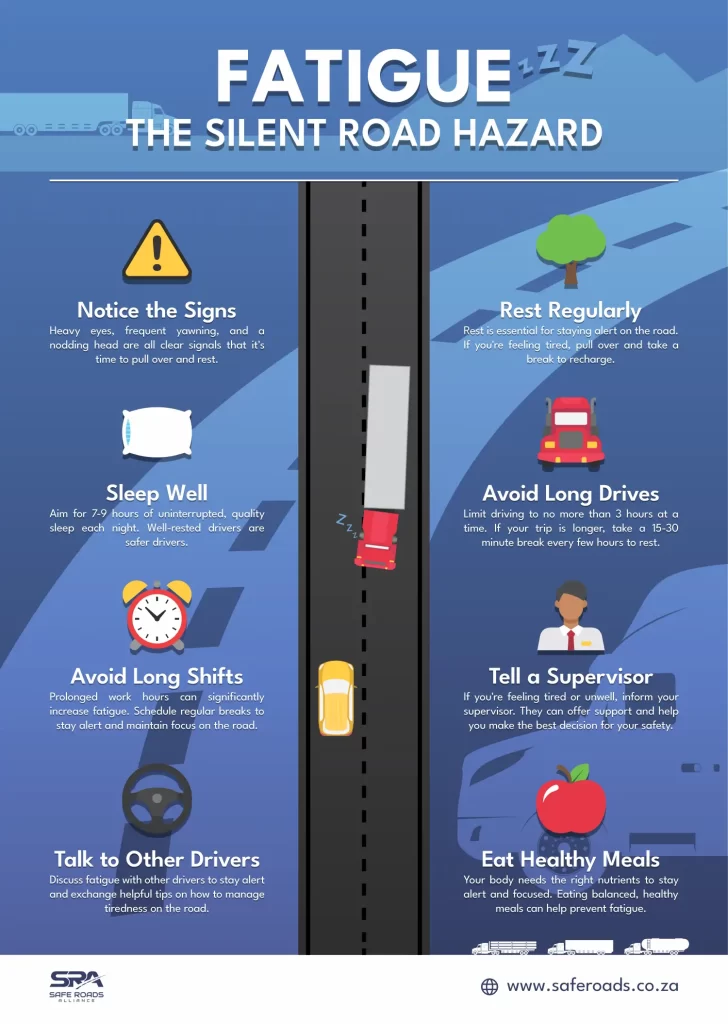
Driver fatigue is one of the most dangerous risks on the road because it often builds up quietly. Many motorists do not realise how tired they are until their concentration drops, their reactions slow down, or they begin drifting out of their lane. SRA (Safe Roads Alliance) highlights this clearly in its fatigue awareness poster, describing fatigue as “the silent road hazard” and urging drivers to recognise warning signs early, sleep well, rest regularly, avoid long shifts, eat healthy meals, and speak up when they are too tired to continue.
Arrive Alive also warns that driver tiredness is a major threat to all road users and notes that fatigue is linked to serious crashes, including head-on collisions and rollovers. The organisation advises drivers to rest before travel, take regular safety breaks, and avoid pushing through tiredness on long journeys.
For drivers in South Africa, especially those covering long distances for work, deliveries, logistics, or intercity travel, understanding fatigue road safety is essential. A tired driver is not simply uncomfortable. A tired driver is less alert, less patient, and less able to respond to danger in time.
Why Driver Fatigue Is So Dangerous
Fatigue affects both the body and the mind. It reduces alertness, weakens concentration, slows reaction time, and makes it harder to judge speed, distance, and risk accurately. Arrive Alive explains that tiredness takes the driver’s focus away from the task of driving, which is why it is treated as a major road safety concern.
This matters even more on South African roads, where many trips involve long stretches of highway, night driving, freight routes, and extended travel between provinces. Arrive Alive notes that long, straight roads and monotonous driving conditions can increase the risk of a driver slipping into a less active state, especially among truck drivers and long-distance motorists.
That is why SRA’s fatigue message is so important. Fatigue does not always arrive dramatically. It can begin with heavy eyes, a few yawns, stiffness, daydreaming, and a slight loss of focus, then quickly develop into a dangerous situation behind the wheel.
Notice the Signs Before It Is Too Late
One of the strongest messages in the SRA poster is simple: notice the signs. On page 1, the poster warns that heavy eyes, frequent yawning, and a nodding head are clear signals that it is time to pull over and rest.
Arrive Alive adds to this by listing common warning signs such as trouble keeping your eyes open, difficulty paying attention, slower reactions, daydreaming, feeling stiff, heavy eyes, and drifting toward the centre line or edge of the road. These are not minor inconveniences. They are signs that your ability to drive safely is already being affected.
Ignoring these signs is one of the biggest mistakes a driver can make. Many people convince themselves they can manage for “just a few more kilometres,” but fatigue usually gets worse, not better, if you keep driving. Safe driving starts with honest self-awareness.
Sleep Well Before You Drive
SRA encourages drivers to aim for 7 to 9 hours of uninterrupted, quality sleep each night, because well-rested drivers are safer drivers. That advice is practical, clear, and directly linked to road safety.
Arrive Alive similarly advises drivers to begin a trip with enough sleep and says a good night’s rest before departure is one of the best defences against tired driving. The organisation also warns that if you start a journey already tired, you are likely to stay fatigued throughout the trip.
In other words, fatigue prevention starts before the engine starts. You cannot “fix” a sleep deficit with willpower alone. Proper sleep is not a luxury for drivers. It is a core part of driver fitness and road safety.
Avoid Long Shifts and Overloaded Schedules
SRA’s poster also warns against long shifts, noting that prolonged work hours can significantly increase fatigue and reduce focus on the road. This is especially relevant for commercial drivers, transport teams, field staff, and anyone under pressure to meet schedules.
Arrive Alive reinforces this by advising drivers not to overextend themselves, not to drive through tiredness, and not to put themselves under pressure to make up lost time. The guidance is clear: no destination is worth risking your life for.
For employers, fleet operators, and supervisors, this is a key road safety lesson. Better route planning, realistic delivery times, approved rest stops, and safer shift management can reduce fatigue risk before a driver is even on the road. Arrive Alive notes that route assessments and planned safe stopping areas can help drivers manage fatigue more effectively.
Rest Regularly on Long Trips
SRA advises drivers to rest regularly and to avoid driving for more than three hours at a time, suggesting a 15 to 30 minute break every few hours on longer trips.
Arrive Alive’s guidance is very similar. The site recommends taking a break every two hours or about every 200 km, and on some pages also advises stopping at least every two hours during longer journeys. It also says that when warning signs of tiredness appear, a rest break or even a short nap can help, rather than trying to push on.
This is one of the best long distance driving safety habits any motorist can adopt. Plan your stops before you leave, use safe and well-lit rest areas where possible, stretch your legs, get some fresh air, and reset your concentration before continuing.
Eat Healthy Meals to Stay Alert
SRA also includes an often-overlooked point: eat healthy meals. The poster explains that balanced nutrition helps the body stay alert and focused and may help reduce fatigue.
Arrive Alive supports this broader link between nutrition, driver fitness, and safer driving. The site notes that healthy eating is part of staying fit and alert, and also warns against heavy foods during long trips because they can leave drivers feeling bloated, lethargic, and less sharp. It further notes that sugary snacks and drinks may give a quick lift but can leave a driver feeling sluggish afterward.
For practical fatigue prevention, that means eating balanced meals before a trip, avoiding overeating at rest stops, staying hydrated, and choosing steady energy over quick sugar spikes.
Speak Up: Tell a Supervisor and Talk to Other Drivers
A valuable part of the SRA poster is that it does not place the entire burden on the driver alone. It encourages tired or unwell drivers to tell a supervisor and also to talk to other drivers about fatigue and safe habits.
That is especially important in professional driving environments. Fatigue management works best when companies create a culture where drivers can report tiredness without fear, get support when needed, and learn from one another. Arrive Alive’s content on truck driver fatigue also points to the value of planning, route analysis, monitored driving hours, and systems that encourage safer behaviour over time.
In short, fatigue prevention is not only personal. It is organisational. Safer roads depend on safer systems as well as safer choices.
Practical Fatigue Prevention Tips for South African Drivers
If you want to reduce driver fatigue and improve road safety, the combined message from SRA and Arrive Alive is straightforward: get enough sleep before travel, recognise warning signs early, avoid long shifts, take regular breaks, eat wisely, and never try to “fight through” tiredness.
It also helps to avoid driving when your body would normally be asleep, to share the driving where possible, and to plan your route and rest stops in advance. These habits are especially important during holiday travel, long-haul trips, and high-pressure work schedules.
Final Thoughts
Driver fatigue is easy to underestimate and dangerous to ignore. SRA’s poster is right to call it a silent road hazard, because by the time many drivers realise how tired they are, their driving ability has already been affected. On page 1, the poster provides a practical fatigue checklist built around sleep, rest, nutrition, self-awareness, and communication.
Arrive Alive strengthens that message by showing how fatigue contributes to serious crashes and by urging South African drivers to rest before travelling, stop regularly, and never continue driving when tired.
For SRA, for employers, and for every driver on South African roads, the message is clear: fatigue prevention saves lives. Staying awake is not the same as staying safe. The safer choice is to rest, recover, and continue only when you are truly fit to drive.
- The ABCs of Defensive Driving in South Africa
- Understanding Speed Limits in South Africa: Why Speed Awareness Saves Lives
- Tyre Condition and Road Safety in South Africa: Why Your Tyres Matter More Than You Think
- Safety Belt Rules in South Africa: Why Buckling Up Saves Lives
- Road Signs in South Africa: Why Understanding Them Saves Lives
Review
98%
Summary For SRA, for employers, and for every driver on South African roads, the message is clear: fatigue prevention saves lives. Staying awake is not the same as staying safe. The safer choice is to rest, recover, and continue only when you are truly fit to drive.